Why Choose a Sapphire Engagement Ring?
Sapphire engagement rings have a royal pedigree — most famously, Princess Diana’s (now Kate Middleton’s) iconic blue sapphire ring. But sapphires aren’t just beautiful; they’re incredibly practical for daily wear, rating 9 on the Mohs hardness scale (second only to diamond).
Available in a rainbow of colors beyond classic blue, sapphires offer a unique alternative to traditional diamond engagement rings at often more accessible price points.
What to Look For
- Color: The most important factor. “Cornflower blue” and “royal blue” are the most desired. Avoid stones that are too dark (inky) or too light (washed out).
- Clarity: Sapphires commonly have silk-like inclusions. Eye-clean stones are ideal but some silk can actually improve the stone’s appearance.
- Cut: Well-proportioned cuts maximize color and brilliance. Oval and cushion cuts are classic for sapphires.
- Treatment: Heat treatment is standard and accepted for sapphires. Untreated sapphires with excellent color are rare and expensive.
Recommended Sapphire Rings
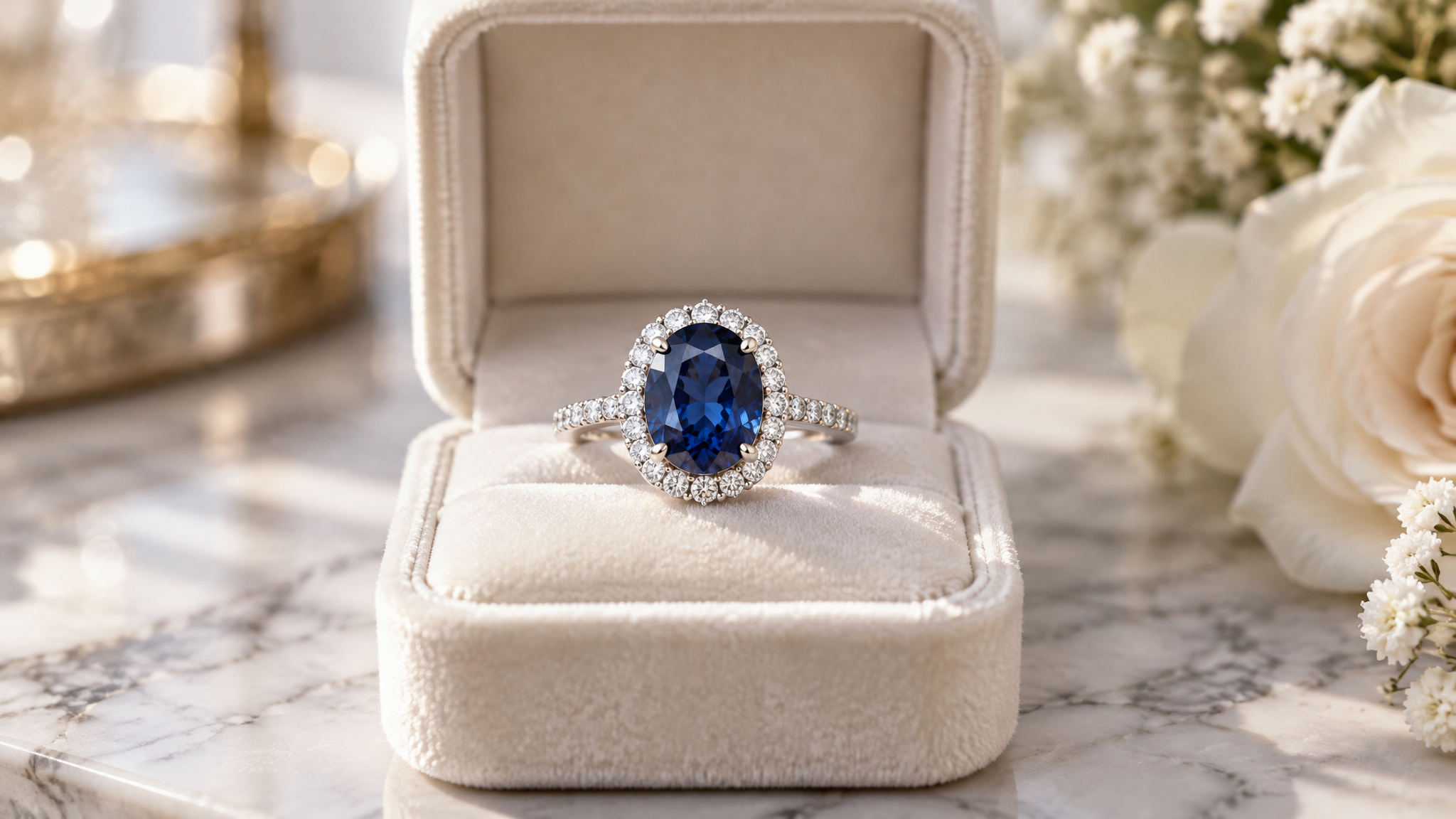
Blue Sapphire Halo Engagement Ring
Oval blue sapphire surrounded by a sparkling diamond halo in 14K white gold. A timeless design inspired by royalty.
See Price on Amazon →Three-Stone Sapphire and Diamond Ring
Center blue sapphire flanked by two round brilliant diamonds in 14K white gold. Classic and elegant.
See Price on Amazon →Sapphire Solitaire in Rose Gold
Round blue sapphire in a minimalist 14K rose gold solitaire setting. Modern and romantic.
See Price on Amazon →Frequently Asked Questions
Are sapphires durable enough for everyday wear?
Absolutely. At 9 on the Mohs scale, sapphires are the second hardest gemstone after diamonds. They’re excellent for engagement rings and daily wear.
Do sapphires come in colors other than blue?
Yes! Sapphires come in pink, yellow, orange (padparadscha), green, purple, and white. These “fancy sapphires” can be stunning and unique engagement ring choices.
How much cheaper are sapphires than diamonds?
A high-quality sapphire typically costs significantly less per carat than a comparable diamond, though prices vary greatly with quality. You can often get a larger, more colorful stone for your budget.